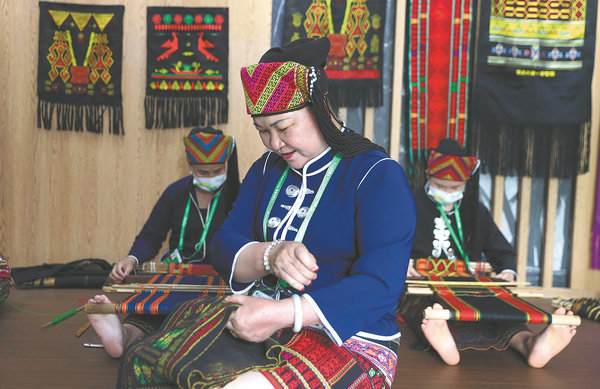
Li Textile Techniques
Overview
The Li textile techniques are a set of traditional Chinese craftsmanship originating from the Li ethnic group of Hainan province. These techniques primarily include spinning, dyeing, weaving and embroidering, transforming cotton, hemp and other fibers into clothing and daily necessities.
The Li textile techniques are unique in their use of warp ikat—a dyeing strategy, double-face embroidery and single-face jacquard weaving. These skills form an integral part of the national intangible cultural heritage and were notably recognized as endangered, needing urgent safeguarding by UNESCO in 2009. Then the UNESCO added the Li textile techniques to its Representative List of the Intangible Cultural Heritage of Humanity on Dec 5, 2024.
Historical and Cultural Significance
The women of the Li ethnic group have been the main bearers of these textile traditions, passing down these intricate skills from mothers to daughters through verbal instruction and demonstration. Despite the absence of a written language, the intricate patterns woven into Li textiles serve as a historical record, capturing the legends, beliefs, taboos and traditions of the Li culture. The textiles also play a crucial role in social and cultural occasions, such as religious rituals, festivals, and weddings where women design their own dresses, embedding symbols and patterns that speak to their personal and communal history.
Techniques and Patterns
-
Spinning: This is considered the most challenging part of creating Li brocade, requiring patience and precision. Fibers such as cotton and wild hemp are collected during the rainy season and processed into yarn, which is then woven into cloth.
-
Dyeing and Warp Ikat: A process where parts of the yarn are bound to prevent dye penetration, creating intricate patterns once woven.
-
Weaving: Single-face jacquard weaving is combined with double-face embroidery to create the unique texture and patterns characteristic of Li textiles.
-
Embroidery: Li women utilize double-face embroidery to add depth and detail to the textiles, an embodiment of their creativity and cultural knowledge.
The patterns, though void of linguistic characters, are loaded with meaning, distinguishing the five major spoken dialects of Hainan Island and capturing the essence of the Li cultural narrative.
Modern Development
Liu Xianglan, a prominent national representative inheritor of Li textile techniques, has been instrumental in preserving and promoting these age-old crafts. Her participation in events such as the Milan Design Week 2023 underscores the global interest in traditional Li textiles. Liu's efforts in founding a company in 2005 and a workshop in 2007 have provided a platform for local women to hone their skills, ensuring the craft's survival and economic benefit to the community.
Nevertheless, the number of skilled practitioners has been declining, posing a threat to the continuation of these techniques. Liu's workshop offers free courses, and her company integrates modern design with traditional styles, producing a variety of products from skirts to home decor items.
Preservation Efforts
Efforts to safeguard the Li textile techniques have been recognized through their inclusion in the UNESCO Intangible Cultural Heritage list. Additionally, institutions like the Hainan Museum play a pivotal role in promoting awareness and understanding of Hainan's diverse ethnic cultures, including the Li. The museum showcases exhibitions dedicated to the island's intangible cultural heritages, highlighting the significance of Li textile techniques in the broader context of Chinese and global cultural heritage. Article reference1. Traditional Li textile techniques. chinaservicesinfo.com. 20182. Traditional Li textile techniques: spinning, dyeing, weaving and embroidering. chinadaily.com.cn. 20203. Weaving classic craft into modern items. chinadaily.com.cn. 20234. Weaving preservation with tradition. chinadaily.com.cn. 2025Photo Gallery(5 pictures)CategoriesCultural HeritageTagIntangible Cultural Heritage of Humanity in ChinaIntangible Cultural HeritageEthnic CultureRelatedLi BrocadeCatalogue1. Overview2. Historical and Cultural Significance3. Techniques and Patterns4. Modern Development5. Preservation Efforts- - - []








